The platform
One platform. Every setting.
Standalone VR headsets and tablets run more than 50 clinician-designed therapy applications, assessed, graded and monitored from a single platform, wherever care happens: hospital, community centre or home.
Hardware & delivery
Therapy that travels light.
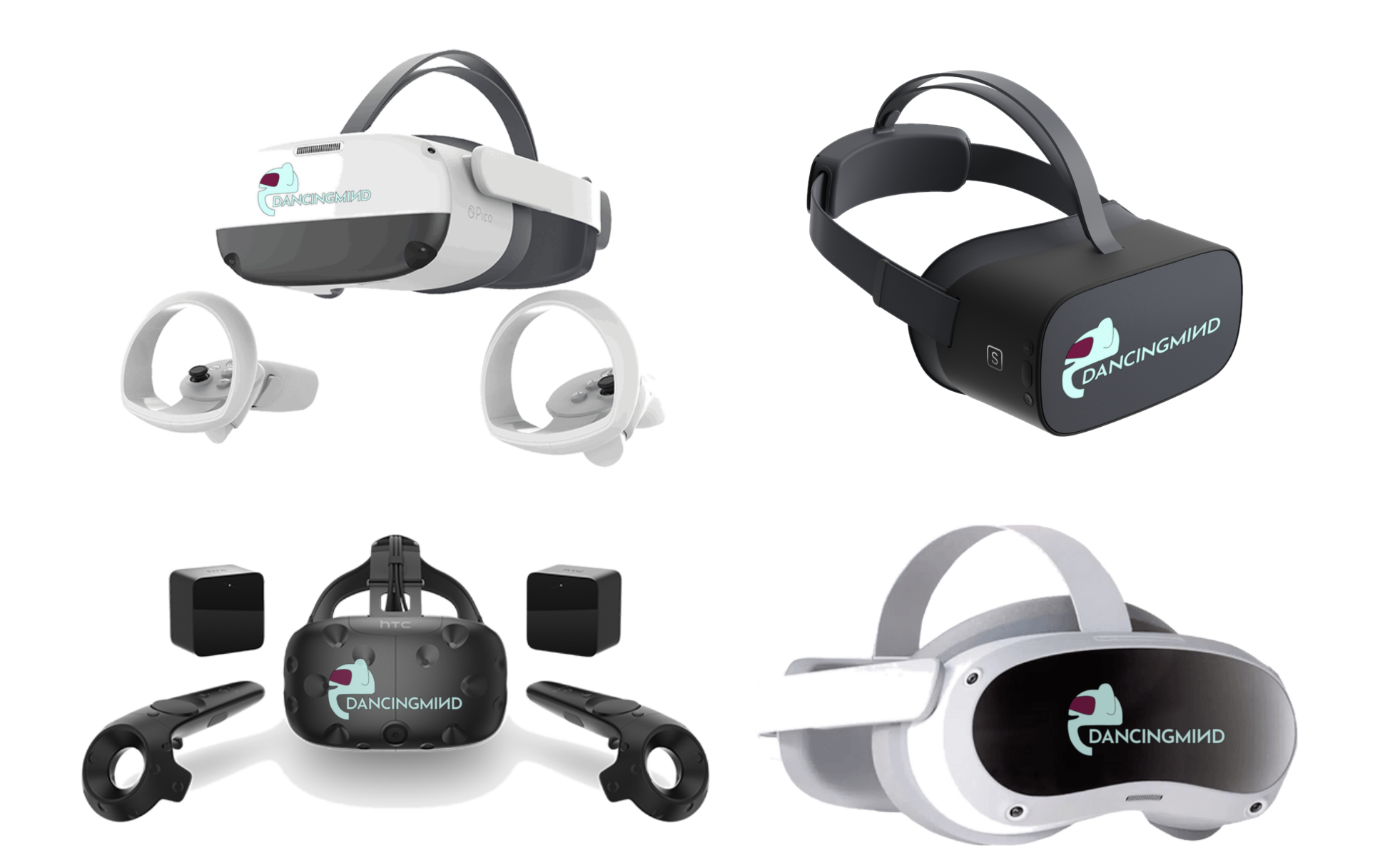
No consoles, no cabling, no dedicated room. If a setting has power and space to move, it can run a full therapy session, which is what lets care move from the hospital to the community centre to the home.
Standalone VR headsets
No PC, no wires, no technician on standby. Each headset runs the full application library on its own: charged, sanitised and handed out in minutes, ready for one patient or a whole group session.
Tablets for screen-based access
The same programmes on a familiar screen. For patients who can’t or won’t wear a headset, tablets keep therapy accessible without changing the protocol or the data captured.
Every setting, one platform
Hospital wards, community centres, living rooms: the same programmes and the same data everywhere, so therapy follows the patient instead of stopping at discharge.
The application library
50+ applications across four therapy domains.
Every application is gamified, clinician-designed and graded by difficulty, so one library serves a first assessment, an intensive rehab block and long-term maintenance alike.
Brain health
Cognitive
Memory, attention and executive function: standardised cognitive training that tracks performance in-game.
- Sustained-attention training with eye tracking
- Memory-retention games scored session by session
Physical health
Physical
Physiotherapy and sports-rehab modules that turn prescribed repetitions into gameplay.
- Upper-limb rehab through fishing and darts
- Motion-tracked reach, range and accuracy during play
Independence
Daily living
Real-world activities practised safely in immersive environments, building skills that transfer back into daily life.
- Everyday routines rehearsed step by step
- Familiar settings practised without pressure or risk
Psychological health
Mood
Mindfulness, relaxation, music therapy and CBT-based scripts for anxiety, low mood and sleep.
- Relaxation exercises with CBT-based scripts and mindfulness
- Graduated exposure programmes co-designed with patients
The adaptive engine
Resistance training for the mind.
A muscle grows when each session asks slightly more of it. Therapy works the same way, so every programme is graded by difficulty, and the platform adjusts the load as the patient improves.
- In-app baselines
- Standardised assessments run inside the programme establish where each patient starts, with no separate testing session.
- Motion tracking
- Headset and controller tracking read speed, range and accuracy during play, not just the final score.
- Progressive overload
- As performance improves, the next session adds just enough challenge to keep the patient growing, never so much that they give up.
Session difficulty over a programme
Illustration: a ladder of bars rising step by step. The patient has cleared the first levels, trains at the current one, and graded levels above provide headroom as they improve.
Data & dashboards
Every session tells the clinician something.
A conventional session ends with a therapist's notes. A DancingMind session ends with structured, granular data, captured automatically and presented so a care team can act on it.
What a session captures
- Game performance
- Scores, accuracy and response times for every application, every session.
- Motion metrics
- Range, speed and smoothness of movement from headset and controller tracking.
- In-app assessment scores
- Standardised screens administered inside the programme, tracked over time.
- Mood check-ins
- How the patient reports feeling before and after a session.
- Wearables
- Optional integrations such as heart-rate, alongside the session record.
01
Monitor a caseload at a glance
Clinicians see every patient’s trajectory across domains, and can drill into any single session when something changes.
02
Run group sessions
One therapist runs many patients at once, each on their own graded programme, extending scarce therapist capacity without diluting care.
03
Carry care across settings
When a patient is discharged, the same programme continues at home on the same platform, remotely monitored by the care team that prescribed it.
Try it yourself
Play the algorithm.
Pick a programme and drag the challenge level. The simulated trend responds the way the adaptive engine grades a real one: inside the band, steady gains; push past it and overload shows up in the data before it shows up in the room.
Clinician console · simulated preview
In the adaptive band · productive challenge
In deployment the engine grades this automatically, session by session. The slider is you playing the algorithm.
Reach-and-grasp performance · 10 sessions + forecast
Simulated data
Simulated data for illustration only, not patient records. Clinical results, with study context, live in the evidence library.
Clinical governance
Built with clinicians. Governed like a medical device.
Gamified doesn't mean casual. The platform is designed, prescribed and regulated the way therapy should be.
Clinician-designed
Every application is designed with practising clinicians, and programmes are prescribed and overseen by care teams. Prescription-led, not self-serve.
Evidence-first
Our claims are matched to published evidence, including randomised controlled trials with partner hospitals, and we label what’s still under study.
Browse the evidence →Regulated
CE-marked (self-certified). Registered as a medical device with Singapore’s HSA.
How we word our claims →Inside a session
What a session sees.
Move the cursor over the photo — or tap “Look inside” — for an illustrative view of the in-session signals a BCI-integrated headset adds to therapy.
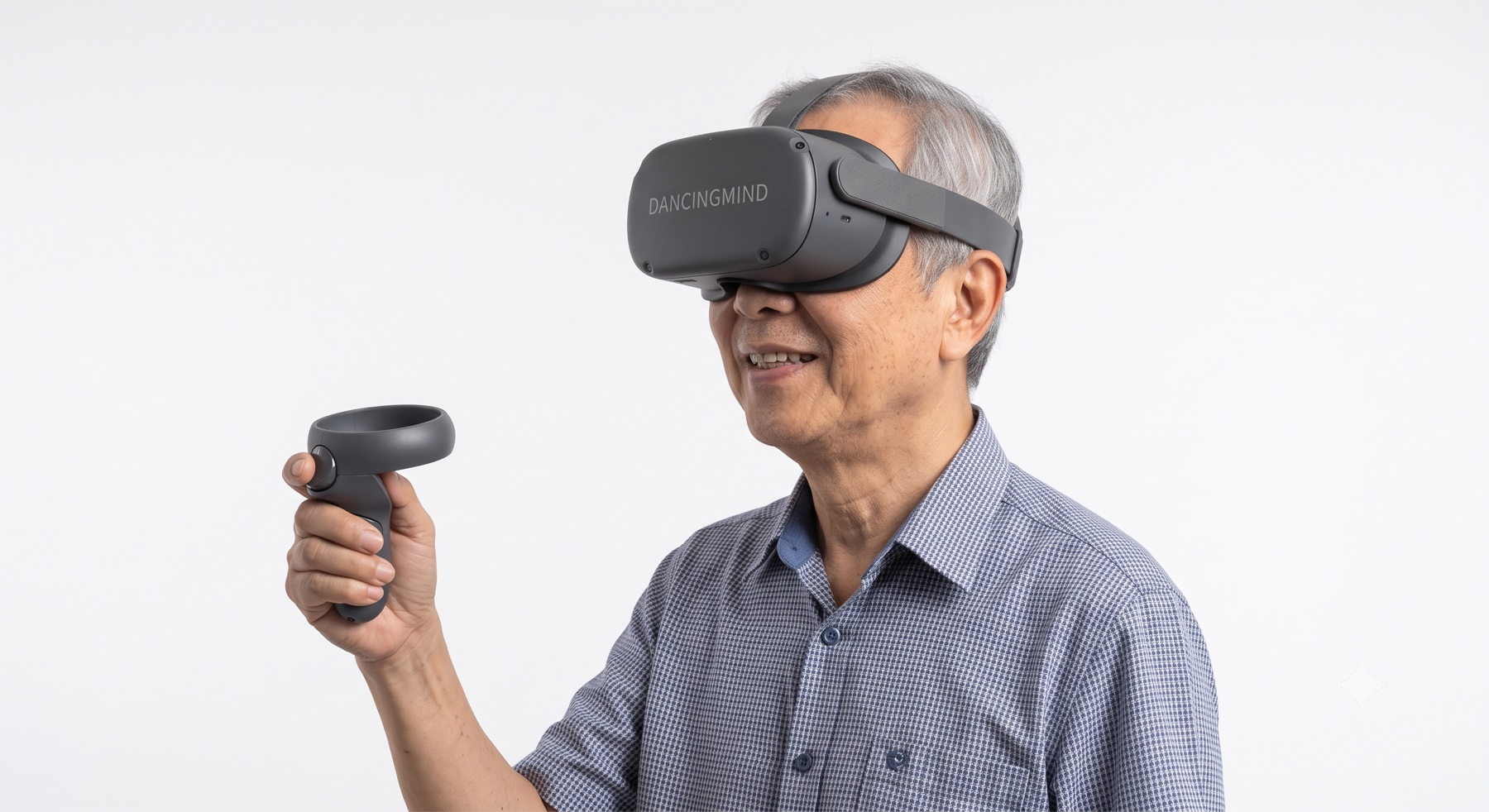
Illustrative in-session view: a brain–computer interface in the headset streams neural signals while speech 62%, cognition 78% and mood 71% update live, and the session adapts in response. In prototype with research partners.
Research frontier
Closing the loop between brain and therapy
With research partners, we've prototyped programmes that integrate brain–computer interfaces directly into VR therapy, measuring the brain during therapy, not after it.
01
Prove the why
Mechanistic validation of why immersive therapy drives the outcomes our trials already show.
02
See the session
Live mapping of attention, mood and engagement while a patient trains.
03
Forecast recovery
The more a patient trains, the more precisely we can project expected gains, by domain and over time, and focus therapy on the areas that need it most.
Forecasting is where the platform's longitudinal data pays off. Every programme already builds a session-by-session record of performance across domains; BCI adds a live neural signal alongside it. Together, they point towards therapy that can project a patient's expected gains over the months ahead, and steer each session towards the areas that need the most work.
In prototype with research partners; not part of the commercial platform today.
See it running with your population.
Hospital ward, active-ageing centre or home programme: we'll demonstrate the platform with your team, in person or remotely. Many community deployments qualify for grant support.